Few things ruin your day faster than walking out to your car and spotting a flat tire. Whether it happens in your driveway or while you’re out on the road in Lake Elsinore, Murrieta, Menifee, or Temecula, it’s never convenient, but it doesn’t always mean you need a brand-new tire.
In many cases, a professional tire repair can get you safely back on the road without breaking the bank. The key is knowing what kind of damage you’re dealing with and which repair method fits best.
In this guide, we’ll walk you through the three main types of tire repair, when they work, and how choosing the right fix can help extend your tire’s lifespan and keep your vehicle running smoothly. Routine checks are equally important—knowing how regular tire inspections prevent repairs helps drivers prevent costly issues before they start.
1. Plug Repair – A Quick Fix for Small Punctures
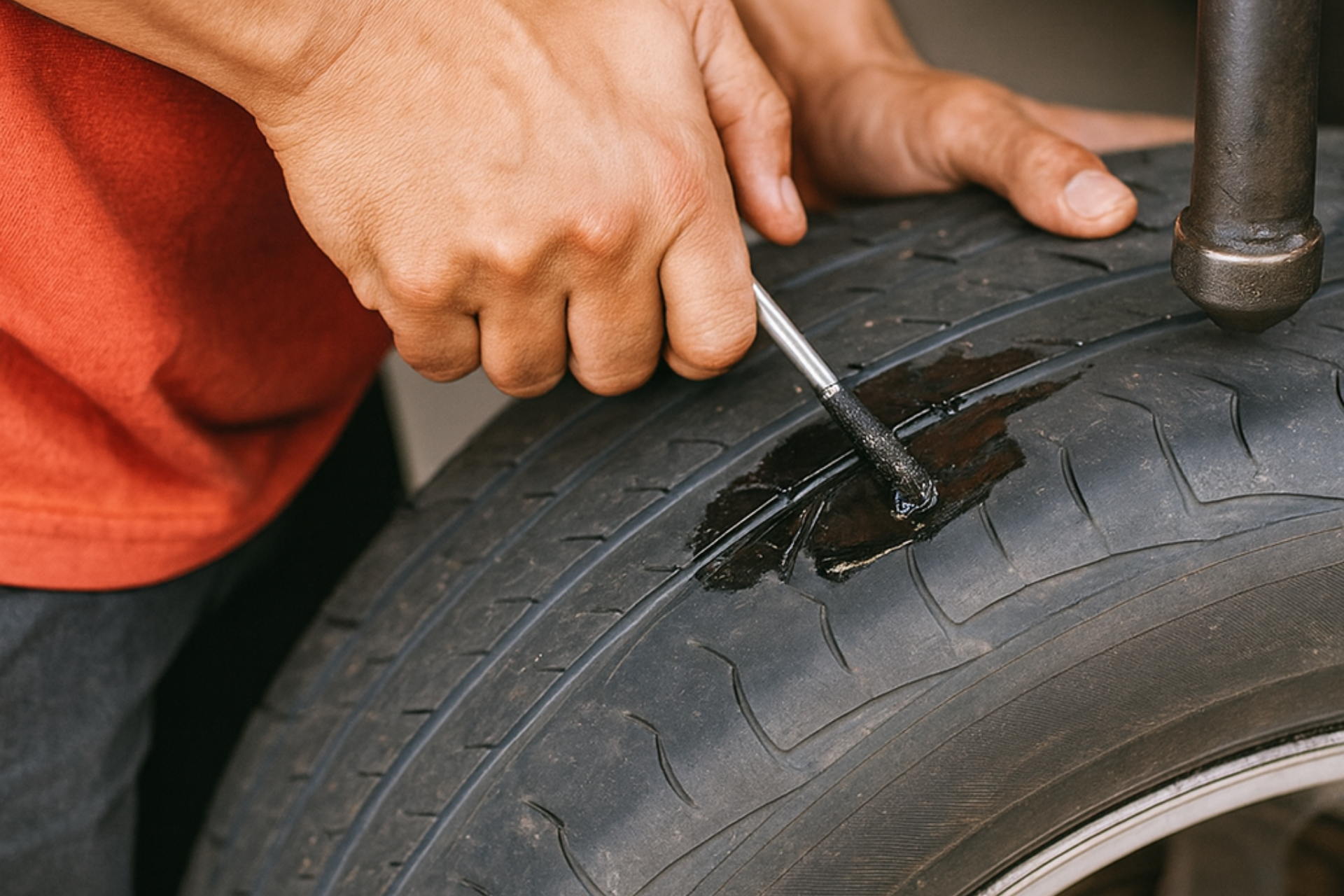
When you’re on your way through Lake Elsinore, Murrieta, Menifee, or Temecula and notice a flat tire, a plug repair can often get you rolling again fast. It’s one of the quickest and most affordable ways to repair minor punctures without replacing the whole tire.
At Quick Change Tires, our mobile technicians handle this type of repair right where you are, whether that’s at home, work, or on the roadside. We insert a durable rubber plug into the puncture to seal the hole from the inside out and stop air leaks immediately.
A plug repair works best for:
Small tread punctures caused by nails, screws, or sharp debris
Holes smaller than ¼ inch located in the center of the tread
Tires with no sidewall or shoulder damage
While plug repairs can hold strong for thousands of miles, they’re designed mainly for minor, clean punctures. If your tire has sidewall damage or multiple holes, a patch or plug-and-patch combo is the safer long-term fix.
2. Patch Repair – A Reliable Fix from the Inside Out
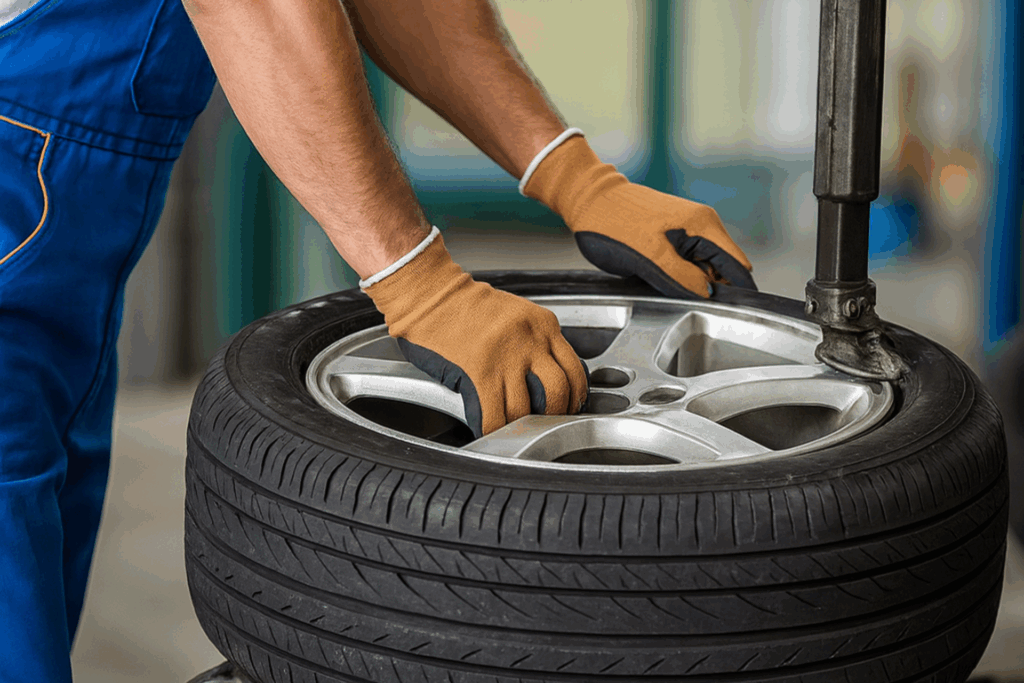
If your tire has a puncture that’s too big for a simple plug but still repairable, a patch repair is the next best option. This method involves removing the tire from the wheel, cleaning the damaged area, and applying a rubber patch to the inside of the tire to seal the puncture completely.
Unlike plugs, patches provide a stronger and longer-lasting repair because they cover the damaged area from the inside, keeping moisture, dirt, and debris from entering the tire.
At Quick Change Tires, our technicians use professional-grade patch kits to ensure a tight seal and restore your tire’s air pressure safely. Patch repairs are ideal for:
Punctures within the tread area (not near the sidewall)
Holes up to ¼ inch in diameter
Drivers looking for a longer-lasting, shop-quality repair without the wait
This method takes a bit longer than a plug but offers greater peace of mind for daily drivers who cover a lot of miles in Southern California’s busy roads and hot weather. The extra step of removing the tire also lets us inspect it from the inside to make sure there’s no hidden damage that could lead to another flat later.
3. Plug-and-Patch Combo – The Most Durable, Professional Repair
When you want the most reliable and long-lasting tire repair, the plug-and-patch combo is the gold standard. This method combines the strengths of both repairs, using a plug to fill the puncture channel and a patch to seal it from the inside.
At Quick Change Tires, this is the go-to solution for customers who want a permanent fix that restores full tire integrity. Our certified mobile technicians start by removing the tire from the rim, cleaning the puncture, and inserting a vulcanized plug through the hole. Then, they apply a reinforced patch inside the tire to ensure a completely airtight seal.
Here’s why this method stands out:
Seals both the inner and outer surfaces for maximum protection
Prevents future air leaks even under heavy driving conditions
Extends tire life by maintaining structural strength
Meets industry safety standards (RMA/USTMA) for professional tire repair
This repair works perfectly for tread punctures that are less than ¼ inch wide and located safely away from the sidewall. It’s especially beneficial for drivers who commute daily or take long highway trips since it provides added durability and peace of mind. Our technicians follow the U.S. Tire Manufacturers Association repair guidelines to ensure every service meets professional safety standards.
With Quick Change Tires’ mobile service, you don’t even have to leave your driveway. Our team comes equipped with the tools and expertise to perform this professional-grade repair on-site, saving you time and hassle.
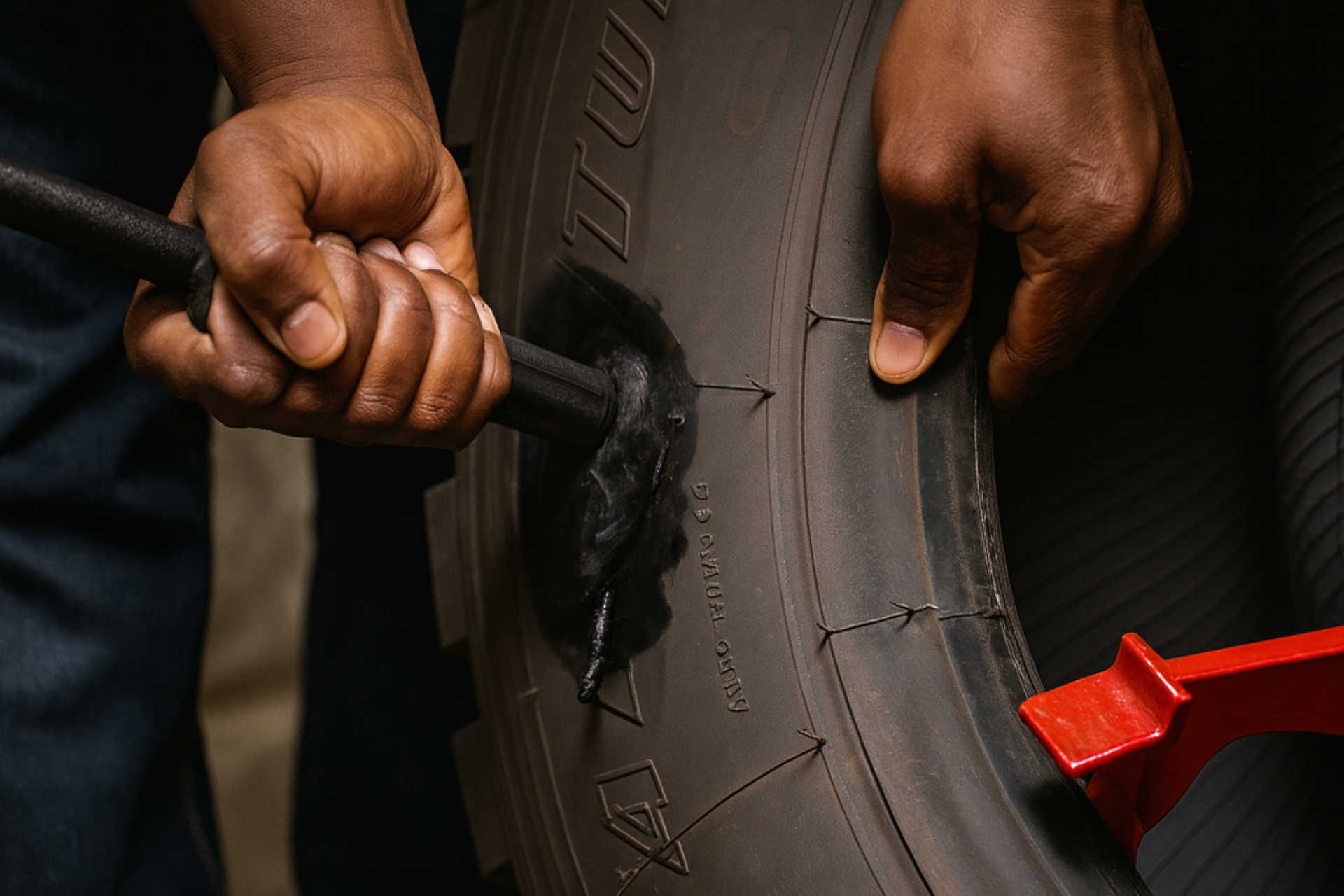
When a Tire Can’t Be Repaired
Not every flat tire can or should be repaired. Even though plugs, patches, and plug-and-patch combos can handle most tread punctures, there are situations where the safest choice is tire replacement.
At Quick Change Tires, our technicians always start with a full inspection to make sure your tire is structurally sound before recommending any repair. Here are a few cases where a repair isn’t an option:
Sidewall or shoulder damage
Large punctures or gashes
Multiple punctures too close together
Severe dry rot or cracking
Previous improper repairs
When that happens, our team helps you choose the right replacement tire for your vehicle and driving style, so you’re not just back on the road, but driving safer than before. If the damage is too severe to fix, we also offer convenient mobile tire replacement services that come directly to you.
Trusted Mobile Tire Repair Near You
When it comes to tire repair, understanding your options makes all the difference in safety, performance, and cost. The right repair depends on the size, location, and severity of the damage, and choosing professionals who know the difference ensures your tires last longer and your rides stay smoother.
A plug repair offers a fast, affordable fix for minor tread punctures.
A patch repair provides a more secure seal from the inside.
And a plug-and-patch combo delivers the strongest, most reliable solution for lasting results.
At Quick Change Tires, we specialize in all three, bringing expert tire repair directly to your home, workplace, or roadside throughout Southwest Riverside County. As trusted Lake Elsinore tire repair experts, we’re committed to restoring your tires quickly, safely, and affordably.
If you’re unsure whether your tire can be repaired or needs replacement, our team will inspect it on-site and recommend the safest, most cost-effective solution.
Call (951) 905-8499 today or complete our contact form to schedule your mobile tire repair service. With Quick Change Tires, help is just a call away, and your next safe drive starts right where you are.
How long does a tire repair usually last?
A properly done tire repair can last for the remaining life of the tire, as long as the damage was within repairable limits and sealed correctly. Plug-and-patch combo repairs, in particular, can provide long-term reliability comparable to an undamaged tire.
Can you drive immediately after a tire repair?
Yes, you can usually drive right away once the repair is complete. However, it’s best to allow a few minutes for your technician to check air pressure and confirm the seal is holding properly before driving at highway speeds.
Is mobile tire repair as reliable as shop repair?
Absolutely. When performed by trained professionals using industry-standard equipment, mobile tire repairs meet the same safety and performance standards as shop-based services. Quick Change Tires provides on-site service with the same precision and materials used in traditional tire shops.
What should I do if my tire keeps losing air after a repair?
If a tire continues to lose pressure, it may have a new puncture or internal damage unrelated to the original repair. Avoid driving on it and schedule an inspection immediately to prevent rim damage or a potential blowout.