Most of us do not expect to run out of fuel. It usually happens quietly, at the end of a long day or in the middle of a route that stretched farther than planned. Traffic moves slower than expected. Detours add miles. Heat increases fuel use just enough to throw off the estimate. The warning light stays on longer than it should, until it does not matter anymore.
Around Lake Elsinore, driving rarely stays contained within one small area. We see it every day. Routes spill into nearby communities, errands stack up, and service calls stretch across city lines. When a vehicle finally runs out of fuel, the real issue is not the empty tank. It is the fact that getting to a gas station is no longer possible.
That is when people stop thinking about fuel and start thinking about what comes next.
When Driving to the Pump Is No Longer an Option
Refueling sounds simple until the vehicle cannot move. Once a car is stuck on a residential street, in a parking lot, or along a busy route, pushing it or leaving it unattended can create more problems than it solves.
For work vehicles, the situation becomes even more complicated. Tools, equipment, and schedules are suddenly tied to a vehicle that is going nowhere. In areas like Lake Elsinore, where distances between stops can be longer and traffic patterns shift throughout the day, leaving a vehicle behind to fetch fuel is rarely practical.
This is usually the point where fuel delivery becomes relevant. Not as a convenience, but as a way to restore mobility without creating additional risk or delay.
The Situations We See Most Often
Most fuel delivery requests start the same way. A driver misjudges range after a long day. A vehicle idles longer than expected. A low fuel warning is ignored one time too many. Many of these common roadside breakdown situations begin with small miscalculations that build up over longer drives.
By the time the vehicle stops, the goal is not to fill the tank completely. In most roadside situations, only a small amount of fuel is needed. Just enough to reach the nearest gas station safely and continue the day.
That is why roadside fuel delivery typically involves only a few gallons rather than a full refill. We also see the importance of fuel compatibility in these moments, which is why common gasoline options like standard unleaded and premium grades are typically used. The focus is getting the vehicle moving again, not changing fueling habits.
What Actually Happens During Fuel Delivery
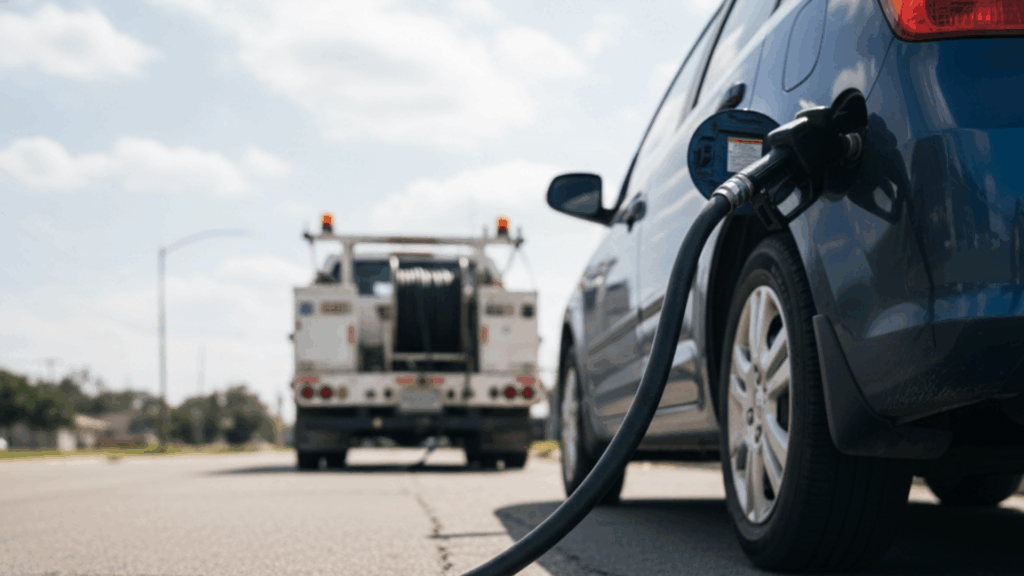
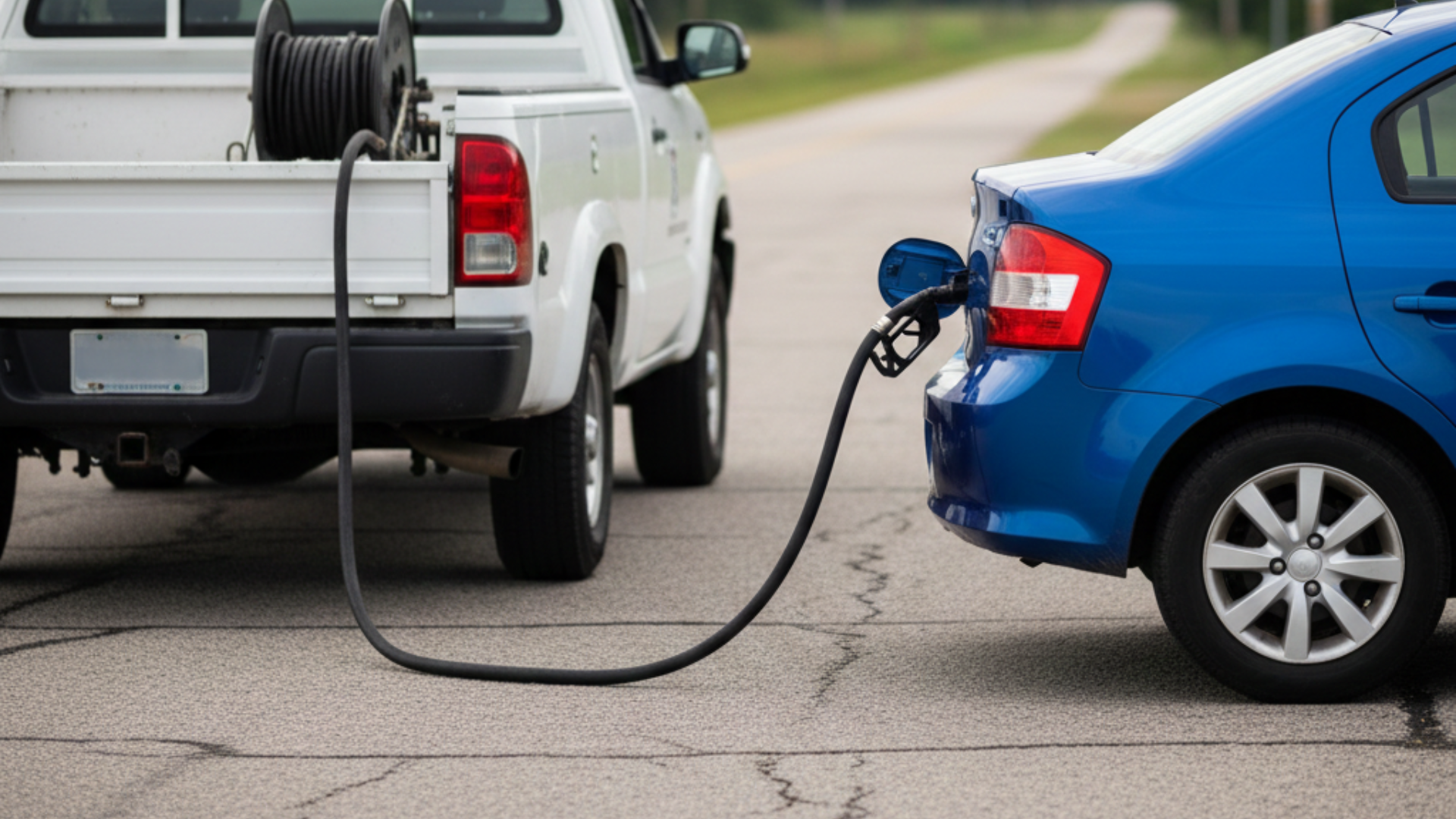
Fuel delivery is intentionally straightforward. Fuel is transported safely and dispensed carefully to avoid spills or disruption. The amount delivered is limited by design, reflecting the reality that the vehicle only needs enough fuel to reach a station.
Location matters. Whether the vehicle is parked on a quiet neighborhood street in Lake Elsinore or along a route connecting nearby cities, the surroundings shape how the delivery unfolds. Our goal is always the same. Add fuel, restore movement, and allow the driver to proceed normally.
Once fuel is added, the situation usually resolves quickly and without drama.
The Questions People Rarely Ask Out Loud
Before calling for fuel delivery, many drivers hesitate because they are unsure what to expect.
Safety is usually the first concern. Limited quantity deliveries reduce risk and are handled with care. Cost is another consideration. While fuel delivery is not priced like pump fuel, it often avoids larger expenses tied to towing, lost time, or missed commitments.
Compatibility is another quiet worry. Drivers want to know the fuel will work for their vehicle. That is why roadside fuel delivery focuses on standard gasoline types that match everyday vehicles.
Once people understand that fuel delivery is meant to solve a narrow problem, most of the hesitation disappears.
Why This Happens So Often Around Lake Elsinore and Riverside County
Driving in and around Lake Elsinore often means covering more ground than expected. Routes stretch across neighboring communities, fuel stations are not always conveniently placed, and traffic can change without warning.
Add summer heat that increases fuel consumption, and miscalculations become easier to make. We see this regularly across Riverside County, especially when schedules are tight and routes are spread out.
In these conditions, having a way to restore mobility without leaving a vehicle behind becomes less about convenience and more about practicality.
When Fuel Delivery Becomes a Known Option
Most people are surprised by how ordinary fuel delivery feels once it happens. The situation rarely involves panic. It is usually just inconvenient.
Over time, patterns become clear. Certain routes always take longer. Certain days involve more idling. Certain areas are harder to plan around. When these patterns repeat, fuel delivery stops feeling like a last resort and starts feeling like a known option.
Understanding when it makes sense removes stress from the situation and turns an unexpected problem into a manageable one.
Helping Drivers Stay Mobile Around Lake Elsinore
For drivers in and around Lake Elsinore, running out of fuel is rarely just about poor planning. More often, it comes down to distance, timing, and conditions that are easy to underestimate across Riverside County.
Fuel delivery exists to close the short gap between being stranded and being able to move again. Knowing how it works, what it typically involves, and when it applies helps drivers stay calm when the unexpected happens.
As a local team that handles these situations every day, we understand the driving patterns and challenges unique to this area. If you ever need fuel assistance, you can call (951) 498-6819 or complete the contact form to reach us directly.
Sometimes, getting just a few gallons at the right moment is all it takes to get back on the road and keep the day moving.